
ITA:
Di recente, ho visitato le gallerie dell’Accademia a Venezia e sono stata colpita da “La Vecchia” di Giorgione.
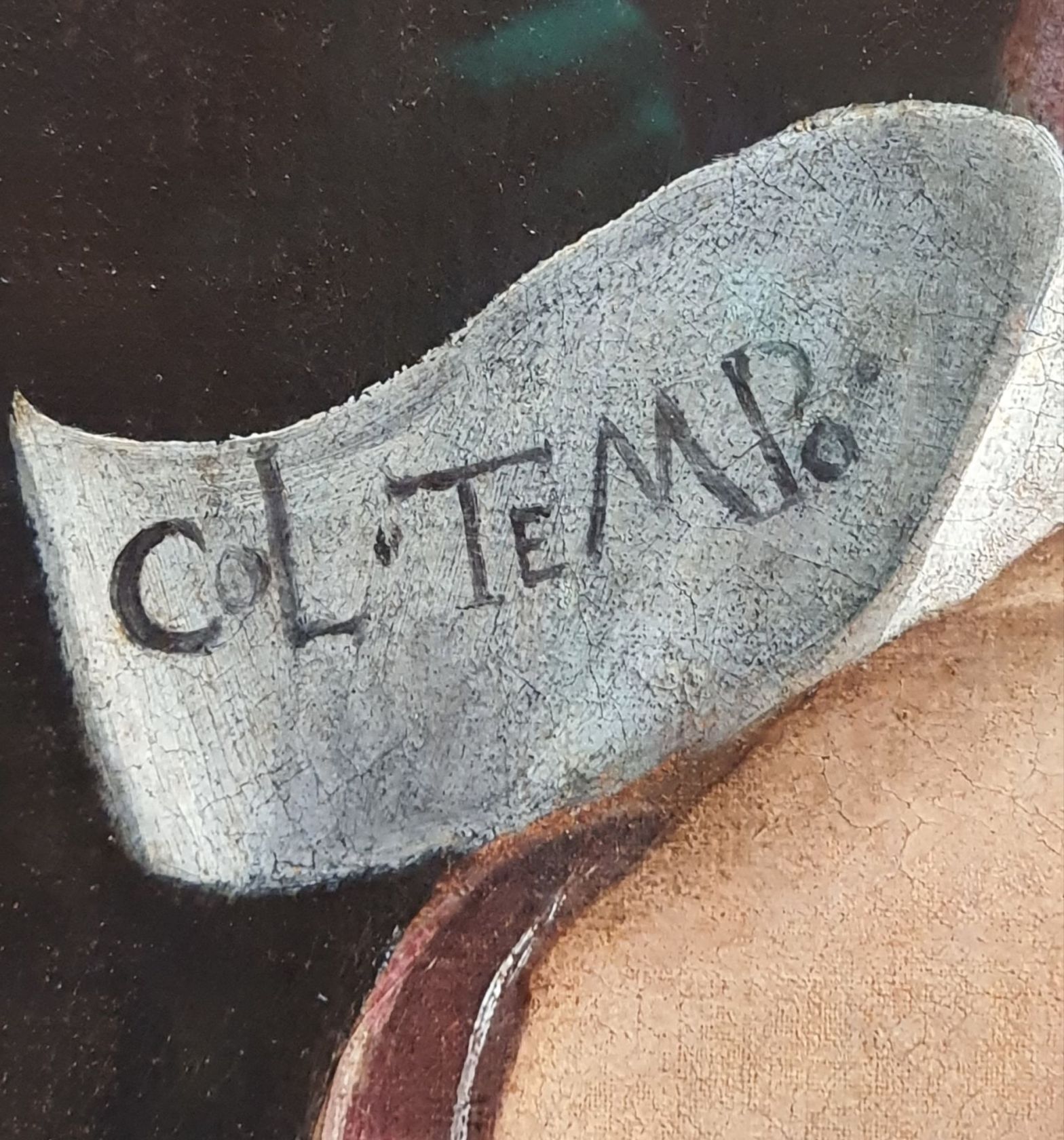
Nel dipinto la vecchia tiene un cartiglio tra le mani su cui campeggia la scritta “COL TEMPO”. Nel corso dei secoli gli studiosi hanno dibattuto per scoprirne il vero significato. È forse un invito a riflettere sulla transitorietà della condizione umana? Oppure pone l’accento sull’importanza dell’esperienza e del tempo per raggiungere la conoscenza e la saggezza?
Ognuno di noi può trovare in quel dipinto un significato diverso, in base alla nostra sensibilità ed esperienza.
Così, una knitter compulsiva e ossessionata come me cosa può aver fatto davanti al dipinto se non iniziare a ponderare sulla relazione tra il tempo e il lavoro a maglia?
Per una knitter il tempo è un nemico, un alleato o entrambi?
Quanti di noi, guardando il bellissimo film “Ricomincio da Capo”, non hanno desiderato almeno un po’ di avere la stessa possibilità di Bill Murray: poter rivivere la stessa giornata per avere il tempo di affinare una tecnica, imparare nuove abilità oppure per correggere gli errori commessi?
Nel mondo reale, tutti noi dobbiamo, nostro malgrado, fare i conti con il tempo che abbiamo.
Per creare qualcosa di duraturo e esteticamente piacevole, tra i mille impegni quotidiani ci troviamo a dover ritagliare il tempo necessario per imparare e per perfezionare nuove tecniche: il punto brioche? Mai provato? Il mosaico, fair isle? I ferri accorciati, preferisci quelli alla tedesca, i W&T oppure shadow wrap?
Ci si sente spesso soverchiati. Più ci si avventura nel mondo del knitting, più si scoprono nuove tecniche, nuovi punti e ogni nuovo progetto sembra richiedere più tempo e più abilità del precedente.
Creare dei capi a maglia che dovranno essere poi indossati ci pone di fronte ad un’ulteriore sfida con il tempo: L’ abbigliamento è soggetto a mode e cambiamenti. Se impieghiamo anni nel realizzare i nostri capi, una volta terminati, possono risultare ormai datati o fuori moda.
Purtroppo, però, la fretta è la peggior nemica di chi lavora a maglia.
La consapevolezza della limitatezza del tempo ci condiziona nella scelta dei progetti portando spesso a privilegiare quelli più veloci e meno complessi.
Personalmente provo un’urgenza creativa, che mi spinge ad iniziare molti progetti contemporaneamente e ciò sfocia spesso in un senso di profonda insoddisfazione e di frustrazione per l’impossibilità di realizzare tutto ciò che vorrei.
La fretta può essere un ostacolo alla perfezione, ma anche l’ostinazione verso la perfezione può impedirci di vedere il valore delle nostre creazioni così come sono.
“Il lavoro del cesello, il labor limae, è necessario per rendere perfetta ogni opera d’ingegno, con continue revisioni.” Così diceva Orazio nella sua Ars Poetica.
Tuttavia il tempo ci pone di fronte ad una scelta: la perfezione o la conclusione?
Dobbiamo decidere se investire ulteriore tempo nel perfezionamento di un progetto o se accettarlo così com’è, con qualche difettuccio, e procedere oltre.
Fino a qui ho affrontato il tema del tempo fisico. Un tempo misurabile, scandito dal ticchettio dell’orologio, il tempo che riusciamo a ritagliarci per immergerci nella nostra attività preferita.
Ma che dire del tempo soggettivo?
Se è vero che per lavorare a maglia c’è bisogno di tempo è però altrettanto vero che immergerci in questa attività ci libera dal tempo “spazializzato”: mentre le nostre mani eseguono dei movimenti ritmici e ripetitivi, il tempo sembra fluire in modo diverso.
Per lavorare a maglia, è necessario prestare attenzione a ciò che si sta facendo, altrimenti si rischia di sbagliare. Mantenere la concentrazione sul presente riduce i pensieri che affollano la mente e la calma che ne deriva ci allontana dalla frenesia del quotidiano e ci consente di accogliere il tempo così come si presenta, senza cercare di controllarlo o modificarlo.
Ogni sezione di una maglia, di uno scialle, è un frammento di tempo che si aggiunge, piccoli momenti che si susseguono.
Alla fine, lavorare a maglia non è solo una questione di tempo, ma anche di trovare un equilibrio tra il fare e l’essere, tra il progresso e la pazienza.
Troviamo il modo di apprezzare la lentezza del processo con la consapevolezza che, con ogni probabilità, il nostro ultimo progetto rimarrà incompiuto.
ENG:
I recently visited the Accademia Galleries in Venice and was struck by Giorgione’s “La Vecchia” (The Old Woman). In the painting, the old woman holds a scroll in her hands bearing the inscription “COL TEMPO” (With Time).
Over the centuries, scholars have debated to uncover its true meaning. Is it perhaps an invitation to reflect on the transience of the human condition? Or does it emphasise the importance of experience and time to achieve knowledge and wisdom?
Each of us can find a different meaning in that painting, according to our own sensitivity and experience.
So, what could a compulsive and obsessed knitter like me do in front of the painting but start pondering the relationship between time and knitting?
For a knitter, is time an enemy, an ally, or both?
How many of us, watching the beautiful film “Groundhog Day”, haven’t wished at least a little to have the same chance as Bill Murray: to be able to relive the same day to have time to refine a technique, learn new skills, or correct mistakes made?
In the real world, we all, unfortunately, have to deal with the time we have.
To create something lasting and aesthetically pleasing, amidst a thousand daily commitments, we find ourselves having to carve out the time needed to learn and perfect new techniques: brioche stitch? Never tried it? Mosaic, Fair Isle? Short rows, do you prefer German short rows, W&T, or shadow wrap?
One often feels overwhelmed.
The more you venture into the world of knitting, the more you discover new techniques, new stitches, and each new project seems to require more time and more skill than the last.
Creating knitted garments that will then be worn presents us with a further challenge with time: Clothing is subject to trends and changes. If we spend years making our garments, once finished, they may be outdated or out of fashion.
Unfortunately, however, haste is the worst enemy of knitters.
The awareness of the limited time we have conditions us in the choice of projects, often leading us to favour faster and less complex ones.
Personally, I feel a creative urgency, which pushes me to start many projects simultaneously, and this often leads to a sense of deep dissatisfaction and frustration at the impossibility of realising everything I would like.
Haste can be an obstacle to perfection, but also the insistence on perfection can prevent us from seeing the value of our creations as they are.
“The work of the chisel, the labor limae, is necessary to make every work of ingenuity perfect, with continuous revisions.” So said Horace in his Ars Poetica.
However, time presents us with a choice: perfection or completion?
We must decide whether to invest more time in perfecting a project or whether to accept it as it is, with some flaws, and move on.
So far, I have addressed the theme of physical time. A measurable time, marked by the ticking of the clock, the time we manage to carve out to immerse ourselves in our favourite activity.
But what about subjective time?
If it is true that to knit we need time, it is equally true that immersing ourselves in this activity frees us from “spatialised” time: while our hands perform rhythmic and repetitive movements, time seems to flow differently.
To knit, it is necessary to pay attention to what you are doing, otherwise you risk making mistakes. Maintaining concentration on the present reduces the thoughts that crowd the mind, and the resulting calm takes us away from the frenzy of everyday life and allows us to welcome time as it presents itself, without trying to control or change it.
Each section of a sweater, of a cardigan, of a shawl, is a fragment of time that is added, small moments that follow one another.
In the end, knitting is not just a matter of time, but also of finding a balance between doing and being, between progress and patience.
Let us find a way to appreciate the slowness of the process with the awareness that, in all likelihood, our last project will remain unfinished.
 Retrobottega Venezia